Published
22 October 2026
Short version: buy a paddle that's comfortable, forgiving and built to the official spec, spend sensibly, and save the stiff, high-end carbon for when you know how you like to play. That's most of it.
The long version is below. We make paddles, so we'll be upfront about where ours fit and where they don't.
What a first paddle needs to do
- –Forgive a mishit. Most of your early shots won't find the middle of the face. A forgiving paddle still sends them somewhere useful.
- –Be easy to swing for an hour. If your wrist or elbow is talking to you after a session, the paddle is too heavy or the grip is wrong.
- –Tell you what happened. You learn faster when you can feel where the ball came off the face.
- –Meet the spec. Any paddle you take to a club should be built to the official equipment standard.
What doesn't matter yet
Signature models, tournament stickers and the stiffest carbon on the shelf are built for players who already have a consistent swing. They can make the game harder while you're learning, because a stiff face rewards clean contact and forgives less when you don't make it.
Spin claims are the other trap. A textured face helps, but your swing makes the spin. Learn the swing first.
Five things to check before you buy
- Face material. Fibreglass and fibreglass-carbon blends are forgiving and lively, which suits new players. Raw carbon is stiffer and more demanding. The full explainer is in fibreglass, carbon or both?
- Core thickness. Thinner cores (12 to 14mm) play faster and give more feedback. Thicker cores (16mm) are softer and more controlled on blocks and dinks. Neither is wrong for a beginner; they just feel different.
- Weight and grip. Pick one up if you can. A grip that's too thick tires your forearm; too thin and the paddle twists in your hand. You can build a thin handle up with an overgrip, but you can't shave a thick one down.
- Shape. Standard-shaped paddles are wider, with a more forgiving face. Elongated paddles give you reach but a smaller sweet spot. Start standard.
- Built to spec, or on the approved list. They aren't the same thing. More on that below.
Built to spec vs approved
Every serious paddle is built to the USA Pickleball equipment specification, which sets limits on things like size and surface texture. Being on USA Pickleball's approved list is a separate step: the maker sends the paddle in for testing and pays for the listing.
For social play, club nights and learning the game, built to spec is what you need. Sanctioned tournaments are different. They can require a paddle from the approved list, so if tournaments are in your plans, check the event's equipment rules before you buy.
Ours are built to the USAPA spec, but they aren't on the approved list. We'd rather not add the cost of the stamp to a paddle most players will never take to a sanctioned event.
How much to spend
If you're only curious, the cheapest start is a come-and-try session. Ask your local club whether they have loan paddles. Bargain sets will also get a ball over a net.
Once you've played a couple of times and want to keep going, buy a paddle you'll still be happy with in six months. That usually means a textured face, a decent core and a comfortable grip, not the most expensive thing in the shop.
Where Swingooo fits
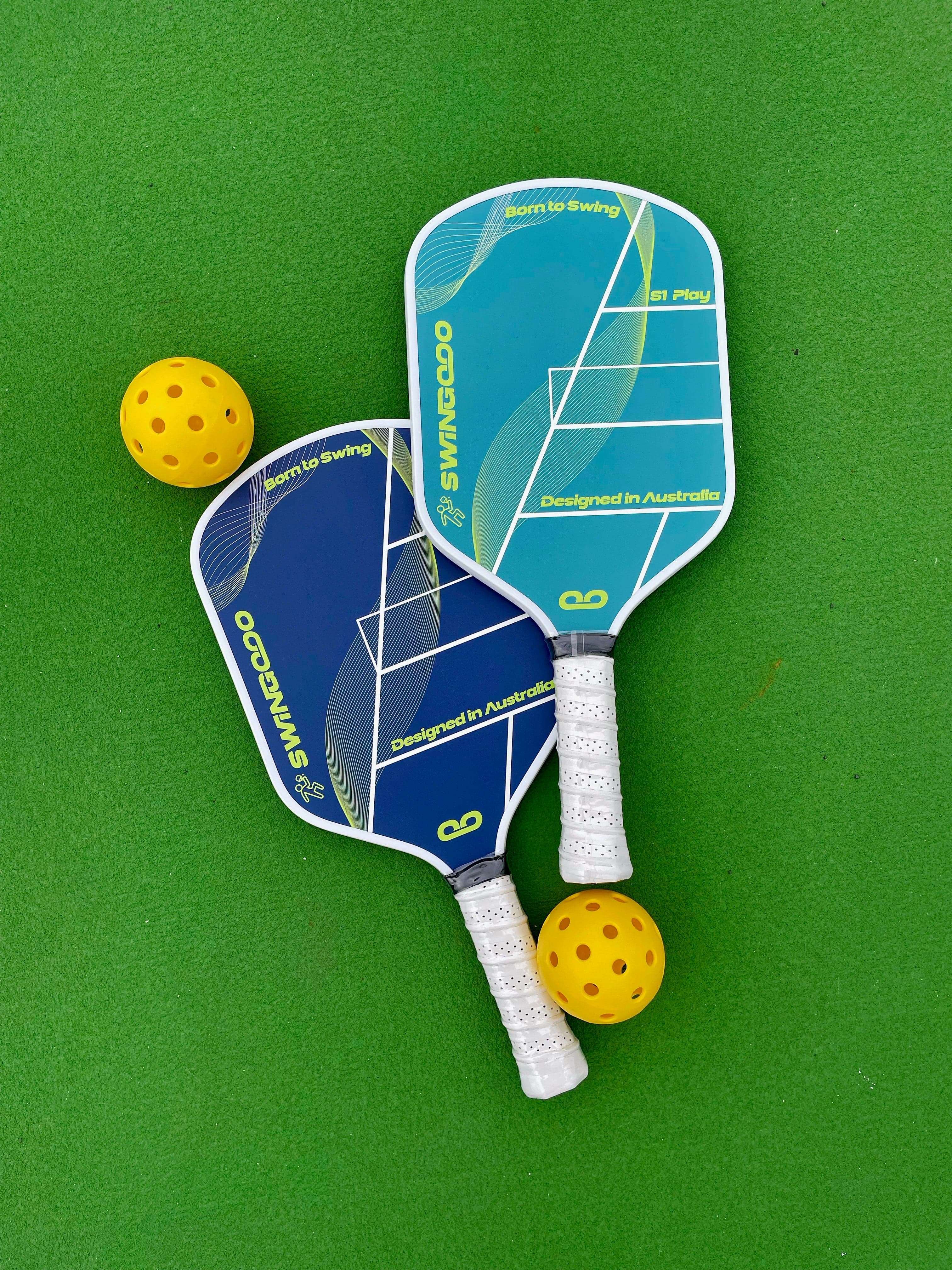
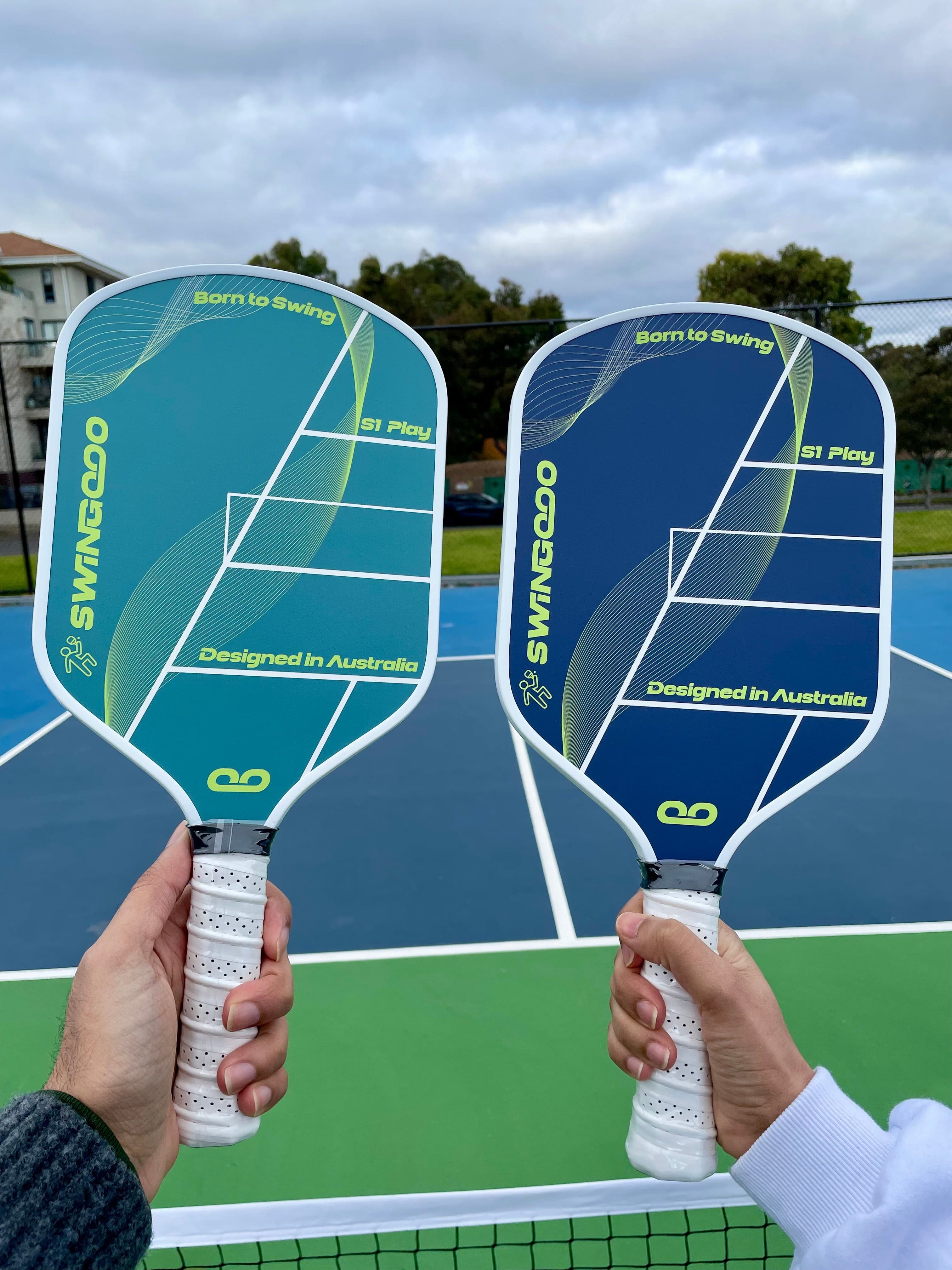
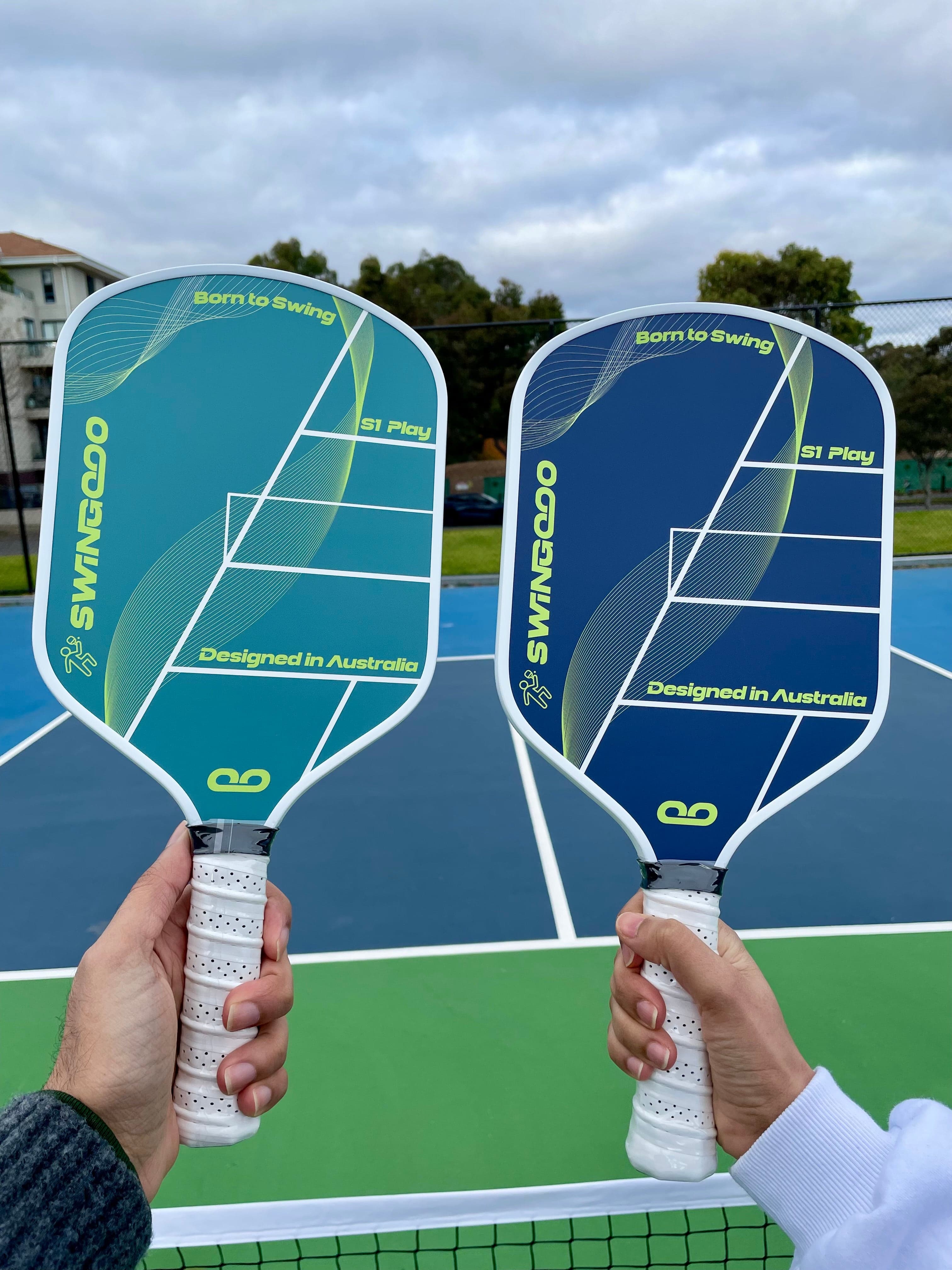
We built the S1 Play as the first paddle we'd hand a friend: a grit-coated fibreglass face that gives the ball something to grab, a 12mm polymer honeycomb core and a standard shape. The 12mm core plays on the faster, livelier side, so you feel every shot. It comes in blue or green.
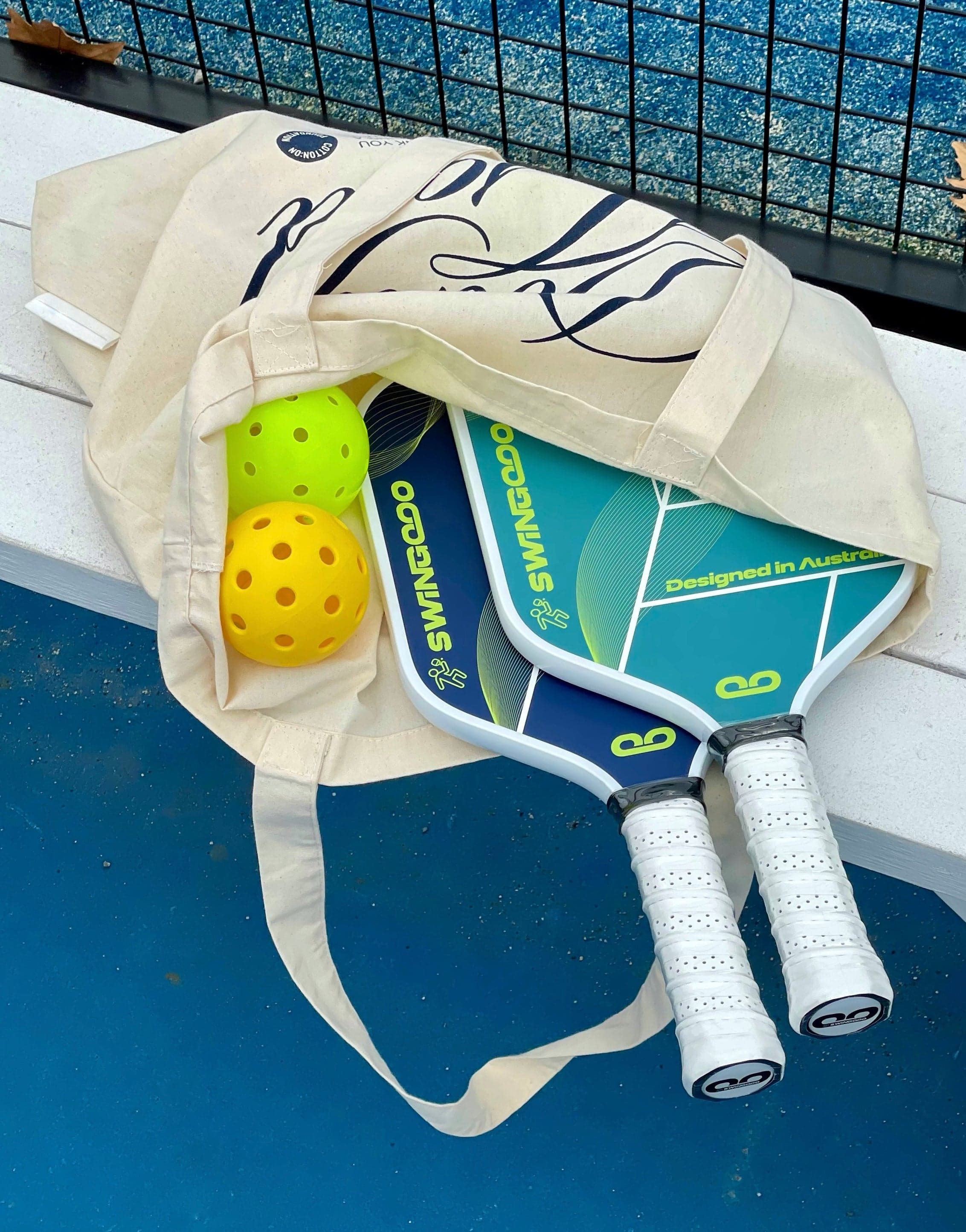
If two of you are starting together, the S1 Play Set puts two Plays and two S40 Play balls in one box, and costs less than two Plays bought separately.
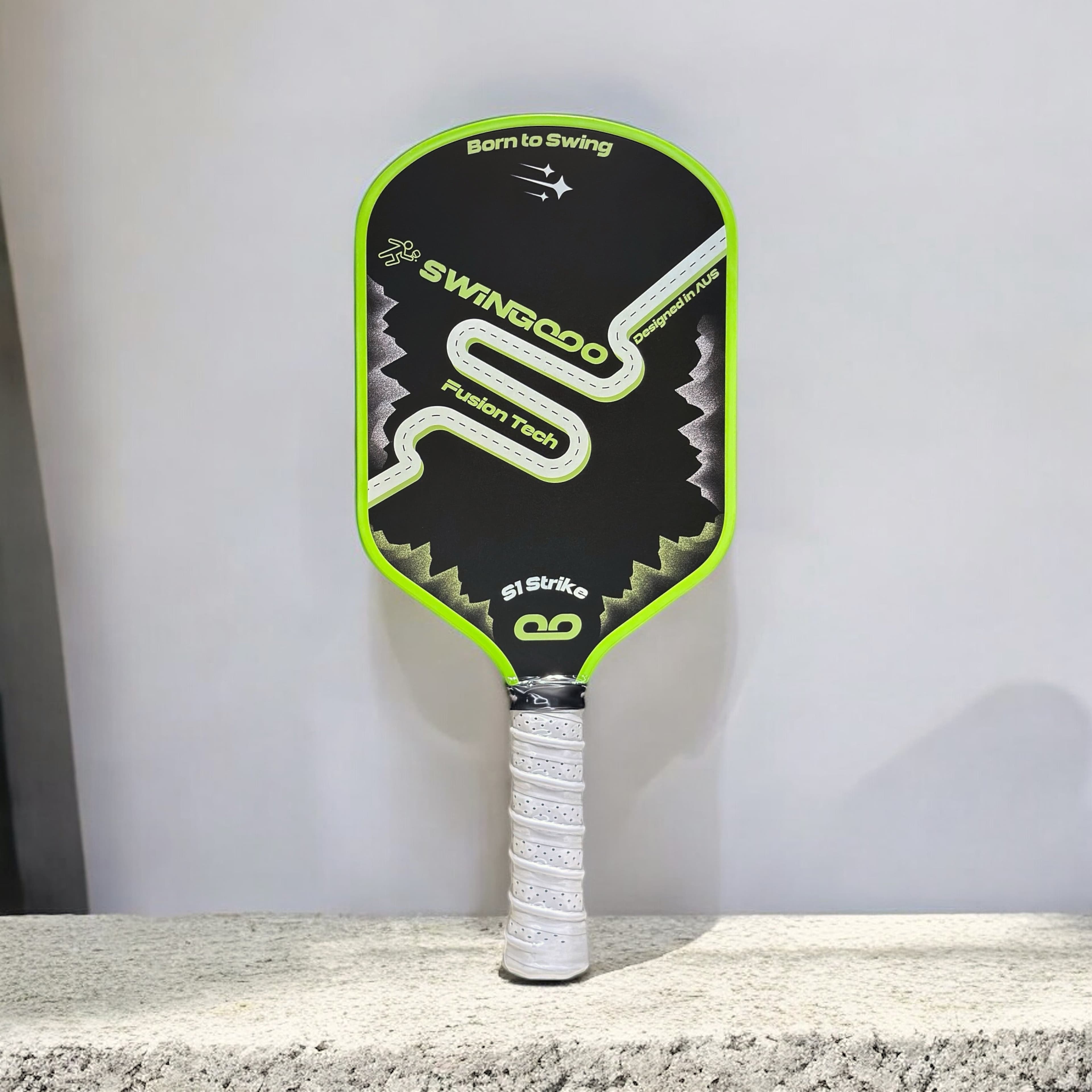
Two honest caveats. If you already know you want the softest, most forgiving block, a 16mm core will suit you better. Our S1 Strike comes in 16mm, but it costs more and is really built for the next stage. And as above, none of our paddles are on the USA Pickleball approved list.
When you're ready to move on from the Play, the Strike and then the S1 Pro Carbon are the next steps. Compare all three side by side.
Balls and the rest of the kit
- –Balls. Outdoor balls are harder, with smaller holes so the wind pushes them around less. Indoor balls are softer, with bigger holes. Playing outside? Get outdoor balls. Our S40 Play balls are a softer rec ball, and S40 Pro balls are firmer and hold their shape in the heat.
- –Shoes. Court shoes (tennis or indoor-court) beat running shoes, which are built for going forward rather than side to side.
- –Sun. Hat, sunscreen and a full water bottle. You know the drill.
Where to play in Australia
Your state pickleball association is the best place to find affiliated clubs and social sessions near you, and it's worth asking at your local tennis club or leisure centre as well. New to the rules? Read how to play pickleball before your first session.
Quick answers
What's the best pickleball paddle for a beginner? A forgiving, standard-shaped paddle with a textured fibreglass or blended face, built to spec, that feels comfortable in your hand. Ours is the S1 Play. Plenty of others fit that description too.
Fibreglass or carbon for a beginner? Fibreglass or a blend. Carbon is worth it once your contact is consistent.
What core thickness should a beginner get? Either works. Go 16mm if you want soft and controlled, 12 to 14mm if you want quick and lively.
Do I need a USA Pickleball approved paddle? Only for competitions that require one. Social play doesn't. For anything sanctioned, check the event's rules.
Should I buy a set? If two people in the house will play, yes. It costs less than two paddles, and you'll have someone to rally with.