Published
22 October 2026
Paddle listings love the word carbon. It sounds fast and expensive, and sometimes it is. But the face material is only one of three things that decide how a paddle plays, and it isn't always the most important one.
Here's what actually changes between fibreglass, carbon fibre and a blend of both. We'll use our three paddles as worked examples, because we know exactly what's inside them.
The short answer
- –Fibreglass flexes a little more on contact. It's forgiving and lively, and it's the usual choice for starter paddles.
- –Carbon fibre is stiffer for its weight. It feels crisper and more predictable, and it rewards clean technique.
- –A blend of the two aims for some of each: touch from the fibreglass, drive from the carbon.
The other two things that matter just as much: how thick the core is, and how the paddle is built.
What's inside a paddle
A paddle is a sandwich. Two thin face sheets, the part that hits the ball, are bonded to either side of a honeycomb core, usually a polymer such as polypropylene. An edge guard or a moulded edge finishes it, and the handle and grip go on the bottom.
Change the face and you change how the surface flexes and how much it grips the ball. Change the core and you change how soft or fast the whole paddle feels. Change the build and you change how solid it feels from edge to edge.
Fibreglass: give and grip
Glass fibre is more flexible than carbon fibre. When the ball hits a fibreglass face, the face gives slightly, which makes it forgiving on mishits and lively without a big swing. That's why so many first paddles use it.
On its own, fibreglass is fairly smooth, so starter paddles often add a textured coating to help the face grab the ball. Like any coating, it wears with heavy use.
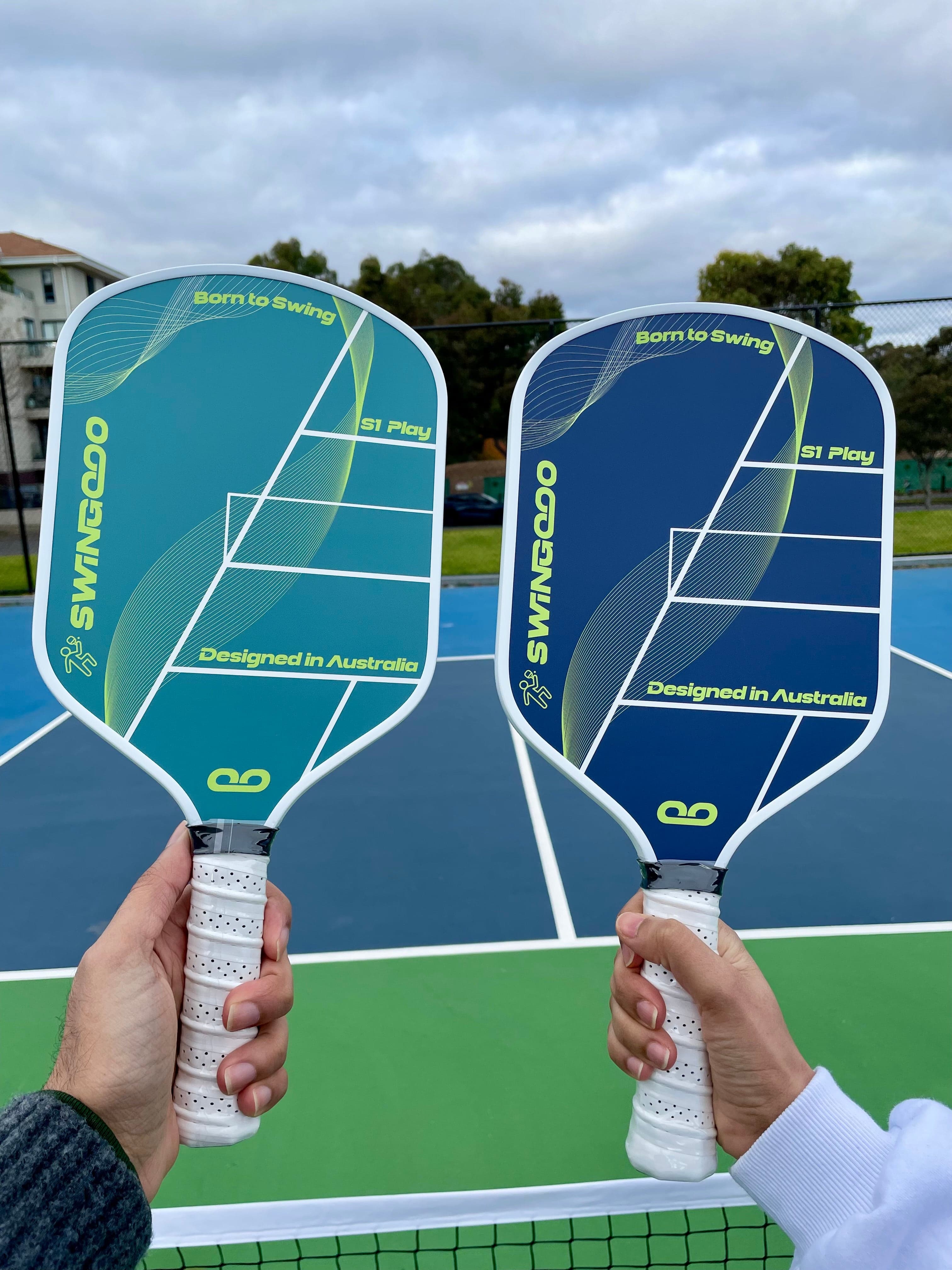
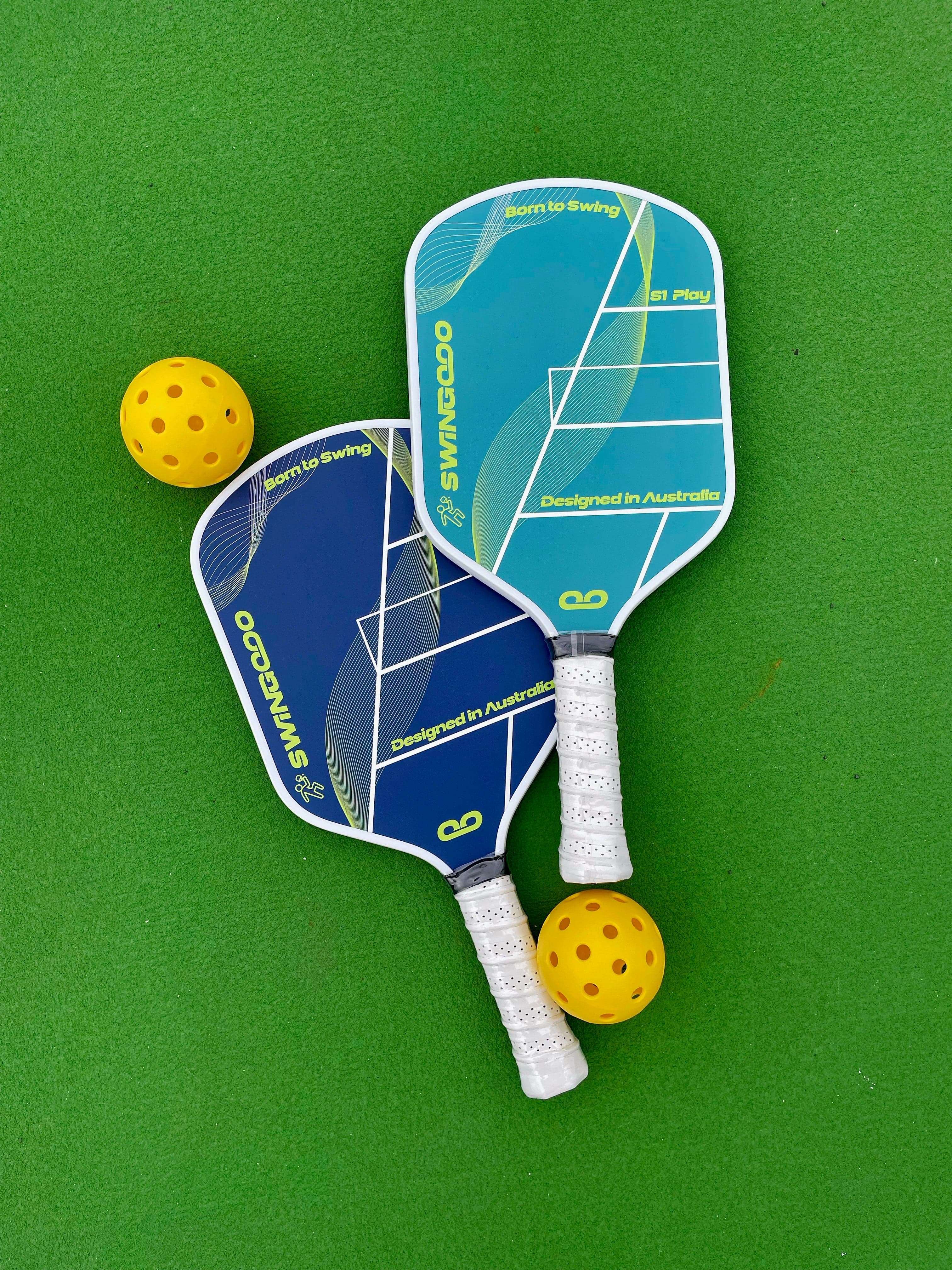
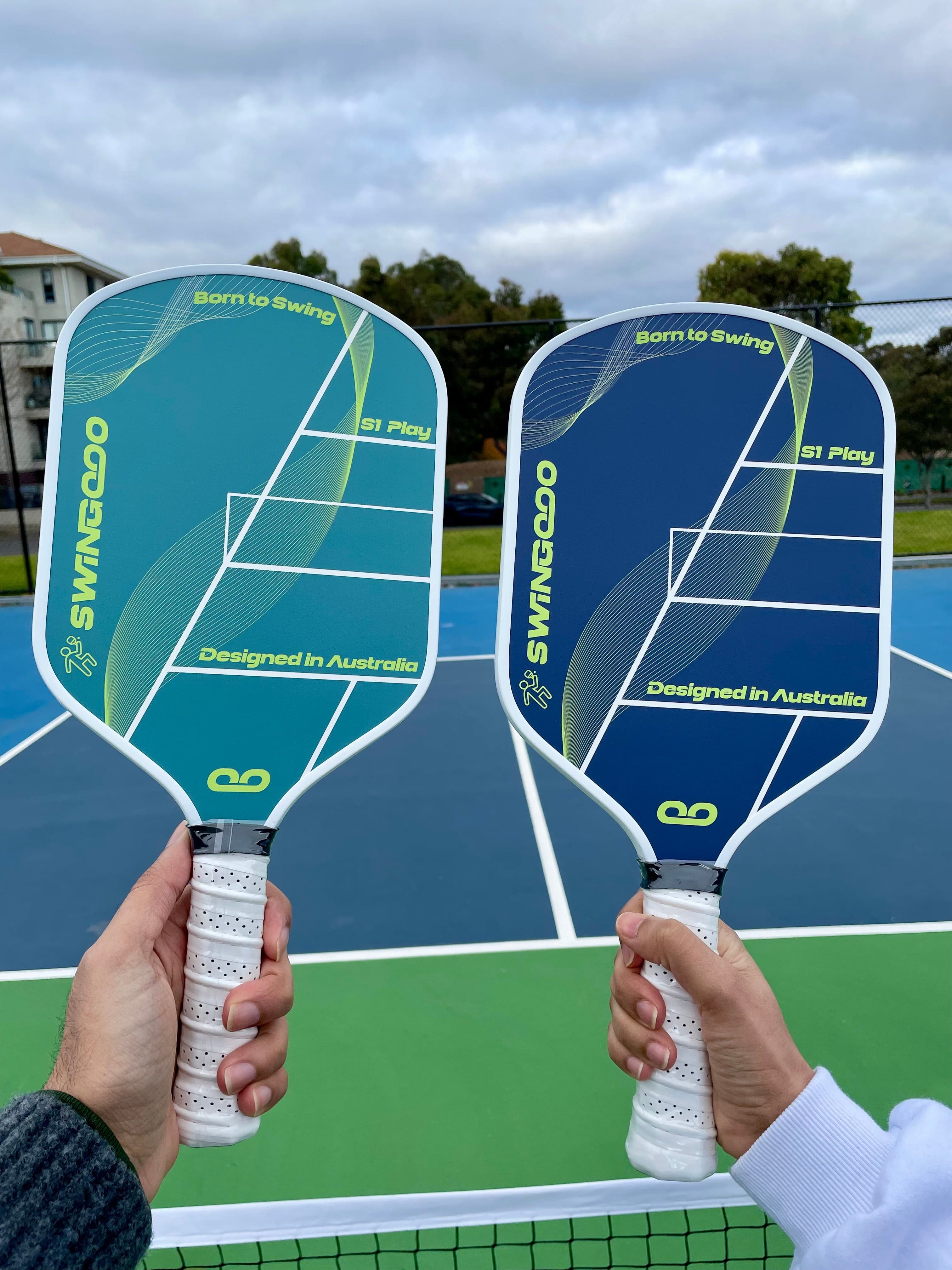
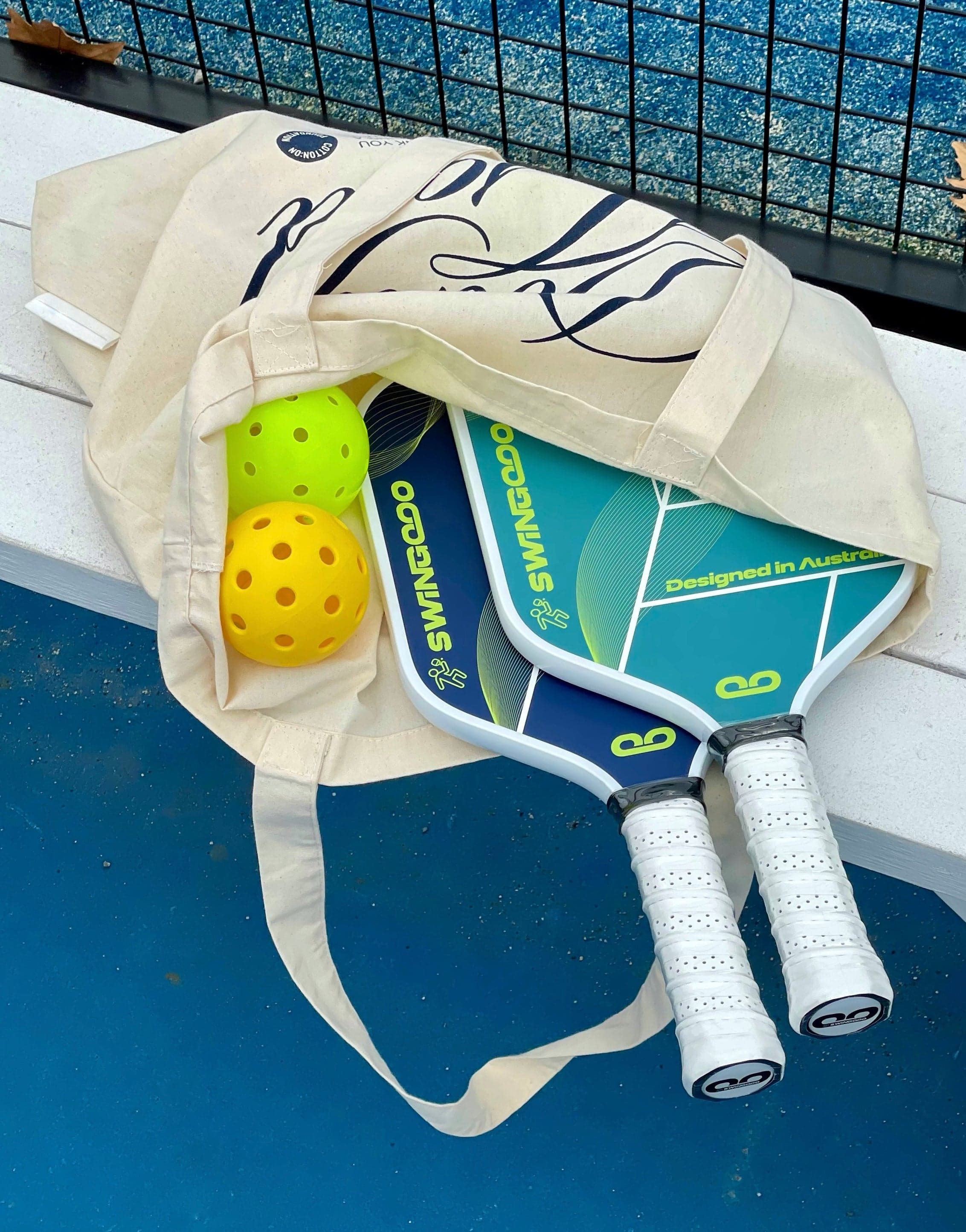
Worked example: the S1 Play. Grit-coated fibreglass face, 12mm polymer honeycomb core, standard shape. The grit lets new players put some shape on the ball without pro-level wrist work, and the thinner 12mm core keeps it quick and full of feedback. It's built for the first year of the game, when forgiving and easy to swing beats stiff and demanding.
Carbon fibre: stiffness and texture
Carbon fibre is stiffer and lighter than glass fibre for the same strength. A stiffer face flexes less, so more of what happens to the ball comes from your swing and the core. Players describe the feel as crisp, controlled and predictable. The flip side is that a stiff face forgives less when your contact isn't clean.
Three terms you'll see on carbon paddles:
- –Raw carbon means the hitting surface is bare carbon weave, with no painted or printed layer over it. The texture of the weave meets the ball directly, which helps grip and spin.
- –3K describes the cloth: each bundle of fibres in the weave holds 3,000 filaments. It's a description, not a quality grade. You'll also see 12K and T700 on listings, and none of them is automatically better than the others.
- –Thermoformed means the paddle is moulded with heat and pressure so the faces and edge become one sealed unit, instead of parts glued together.
Worked example: the S1 Pro Carbon. Raw 3K carbon face, thermoformed unibody, 14mm core. It's the stiffest and most demanding paddle we make, designed for players whose technique is ready for it. We build it as one piece so its response holds up session after session, and it's built to USAPA spec.
Both: the blended face
A blended face combines glass fibre and carbon fibre in the hitting surface. The idea is to keep fibreglass's give for the soft game and add carbon's stiffness for drives and put-aways, so you don't have to choose.
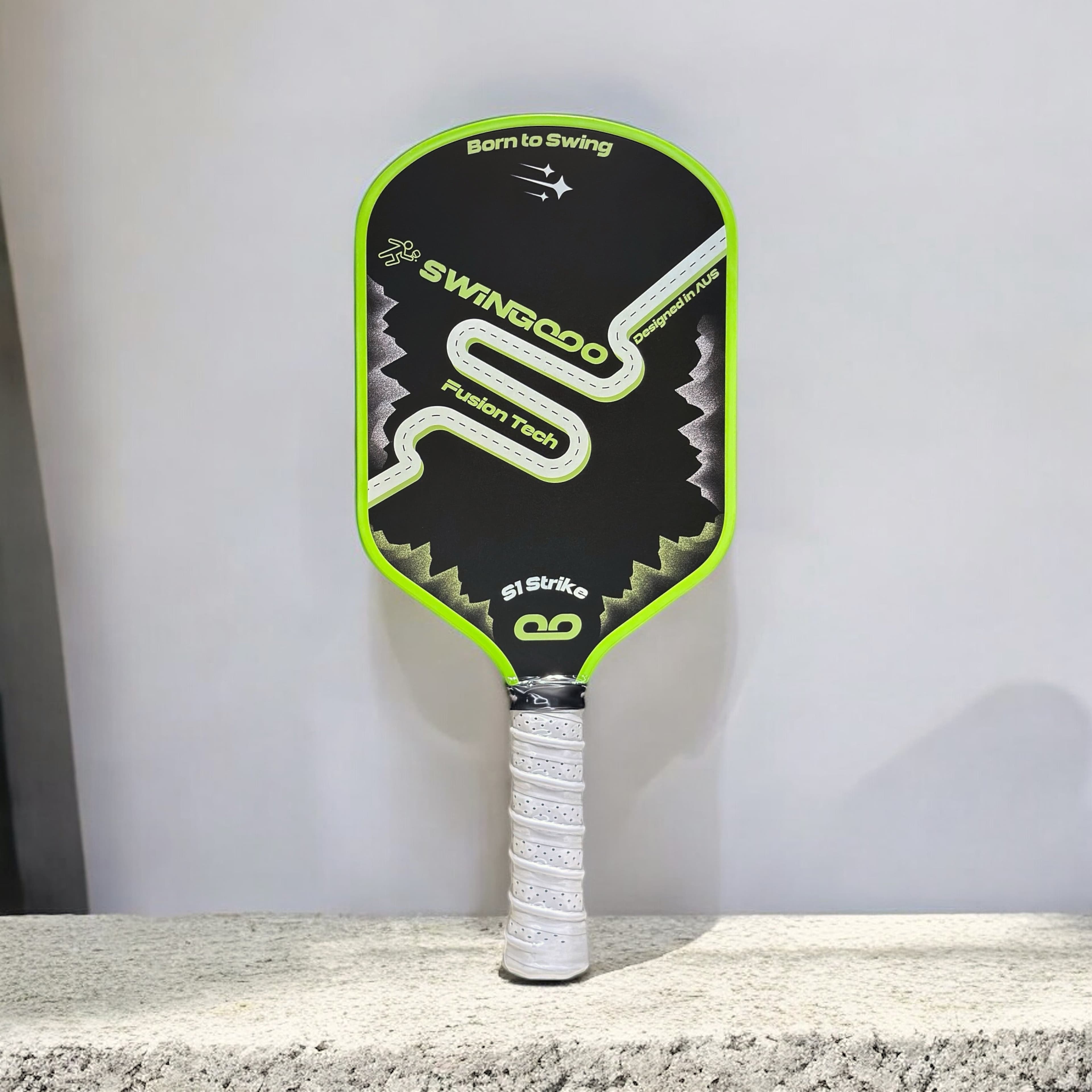
Worked example: the S1 Strike. Our Fusion Tech face blends fibreglass and carbon fibre over a polypropylene honeycomb core, with a balanced shape and a moisture-wicking grip. Fibreglass for spin and resets, carbon for pop on the drive. It's the paddle for when the Play isn't keeping up and you're not ready for the Pro.
The core matters as much as the face
A lot of what players call soft or powerful comes down to core thickness.
- –Thinner cores (12 to 14mm) play faster off the face, with more pace on drives and more feedback in your hand.
- –Thicker cores (16mm) are softer, keep the ball on the face a fraction longer, and make blocks, resets and dinks easier to control.
That's why the Strike comes in two thicknesses with the same face: 14mm if you want it punchier, 16mm if you want softer hands. The Play runs a 12mm core and the Pro 14mm.
Myths worth dropping
- –"Carbon is always better." It's stiffer, which suits some players and not others. For a beginner, forgiving usually wins.
- –"The right face gives you spin." Texture helps at the margins. Your swing does most of the work.
- –"Approved means better made." A paddle on the USA Pickleball approved list has been submitted, tested and listed, and the maker pays for that. Ours are built to the same spec but aren't on the list; we'd rather keep the cost of the stamp off the price.
Which should you choose?
- –New to the game: fibreglass. Start with the S1 Play.
- –A few months in and want touch and pace: a blend. The S1 Strike, 16mm for touch or 14mm for pace.
- –Consistent contact, after precision and bite: carbon. The S1 Pro Carbon.
Still deciding? Compare the three side by side, or start with our beginner's guide.