Published
Short answer: Outdoor pickleballs are harder and heavier, with about 40 small holes, so they fly straighter in wind and stand up to rough court surfaces. Indoor balls are softer and lighter, with about 26 larger holes, which slows them down and makes them easier to control on smooth floors. Use outdoor balls outside and indoor balls in halls. In Australian heat any ball softens; in cold weather hard outdoor balls are more likely to crack.
Indoor vs outdoor at a glance
| Indoor ball | Outdoor ball | |
|---|---|---|
| Holes | About 26, larger (around 10.9 mm) | About 40, smaller (around 7.2 mm) |
| Plastic | Softer | Firmer and smoother |
| Weight | Lighter | Heavier |
| In wind | Pushed around more | Flies straighter |
| Pace | Slower, easier to control | Faster, skids more off the court |
| Made for | Wooden or synthetic hall floors | Hard courts: concrete and acrylic |
| Wear | Softens and goes out of round | Can crack, especially when cold |
Hole counts and sizes are typical figures from Pickleball Warehouse's ball guide; exact numbers vary by ball. The official specification allows anywhere from 26 to 40 holes and sets the size, weight and bounce every ball must meet (USA Pickleball Equipment Standards Manual).
Why the holes matter
The holes are what make a pickleball slow down. More, smaller holes and a heavier ball mean the wind has less to push against, which is why outdoor balls fly straighter. Fewer, larger holes and a softer, lighter ball slow it down and keep the bounce lower and more forgiving on a smooth indoor floor. As one retailer's guide puts it, heavier balls fly straighter and more predictably.
Can you use an outdoor ball indoors?
You can. The official rulebook says every approved ball is acceptable indoors or out; larger-hole balls are simply the custom indoors and smaller-hole balls outside (2026 USA Pickleball Official Rulebook, rule 3.C.1). In practice, the session decides. Many indoor sessions and clubs have a ball they play, so bring what they use, or ask.
Going the other way is harder work. A soft indoor ball on an outdoor court gets blown around, and a rough surface wears it quickly.
Heat, cold and Australian courts
Temperature changes a ball more than most players expect.
- –In heat, balls soften. In an independent test by Pickleball Science, one popular outdoor ball was roughly half as stiff at 49 °C as at room temperature (how temperature affects a pickleball). A softer ball bounces lower and plays slower, and it can go out of round over a long session.
- –In cold, balls stiffen and crack. The same test found balls become very stiff and brittle near freezing, and Pickleball Central notes hard outdoor balls tend to crack below about 4 °C (40 °F) (its ball guide).
So for a 35 °C Saturday in Perth or Brisbane, a firm outdoor ball made for heat is the one to pack, and on a frosty winter morning in Canberra or Hobart, expect to crack more balls than usual. Keep spares in the shade (or the car, not the boot in summer), and rotate them so one ball isn't doing all the work.
How to tell when a ball is done
- –It's cracked. Even a hairline crack changes the bounce. Bin it.
- –It's soft or lopsided. Squeeze it: if it gives more than a new one, or wobbles in flight, it's time.
- –It bounces low. The official test drops a ball from 198 cm onto granite and expects a bounce of 76 to 86 cm (USA Pickleball Equipment Standards Manual). Your driveway isn't granite, but if a ball bounces noticeably lower than a fresh one from the same height, retire it.
Our balls
Both of ours are outdoor balls:
| Ball | Type | What it's for | Everyday price |
|---|---|---|---|
| S40 Play Balls | Outdoor | Softer feel for practice, social hits and new players | $14.99 for three |
| S40 Pro Balls | Outdoor | Firmer match ball, made to hold its shape in the heat | $19.99 for three, $94.99 for eighteen |
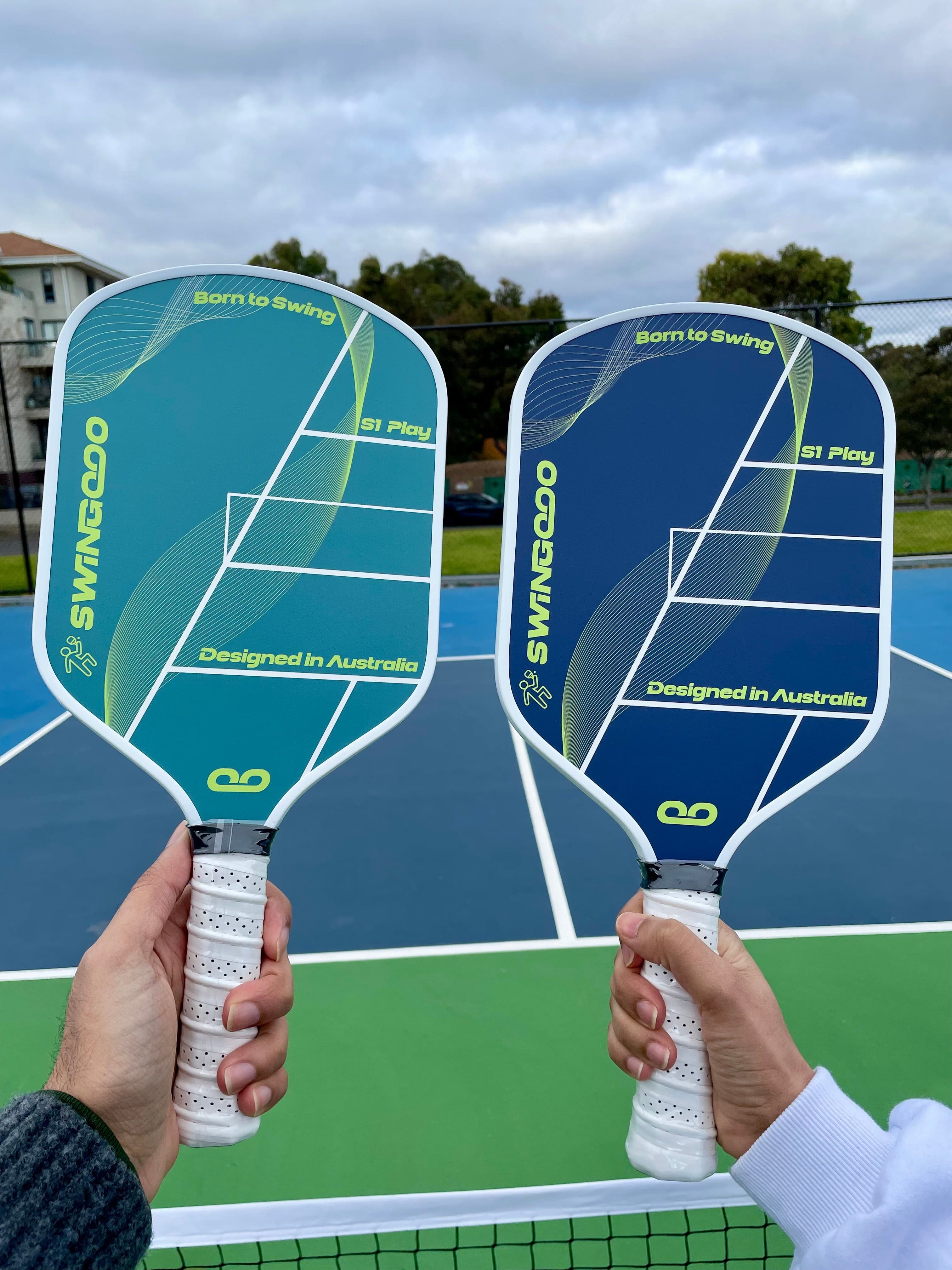
The S1 Play Set comes with two S40 Play balls. If you're buying a paddle and balls together, a S1 Play plus a pack of S40 Play balls is $114.98, which clears the $110 free standard delivery line.
Our S40 balls aren't on USA Pickleball's approved ball list, so if you're playing a sanctioned event, use the ball the tournament supplies. For social games, club nights and practice, they're made for the job.
Choosing a paddle to go with them? Compare the three paddles or try the paddle matcher.
Sources
- –2026 USA Pickleball Official Rulebook, rule 3.C (balls).
- –USA Pickleball Equipment Standards Manual, section 2.D: ball size, weight, holes and bounce test.
- –Pickleball Warehouse: how to choose pickleballs: typical hole counts and sizes.
- –Pickleball Science: how temperature affects a pickleball.
- –Pickleball Central: pickleball balls guide.