Published
Short answer: A 16mm core is softer and steadier: it soaks up more of the ball's pace, so dinks, resets and blocks are easier to control. A 14mm core is livelier: more pop on drives and a quicker, crisper feel at the net, with a little less forgiveness. Choose 16mm if your game is built on control, 14mm if you like to attack.
What "14mm" and "16mm" measure
A pickleball paddle is a sandwich: two thin face sheets bonded to a honeycomb core, usually polypropylene. The number on the label is the thickness of that core. The faces add a little, so the paddle itself measures slightly more.
The core does two jobs. It holds the faces apart, which makes the paddle stiff, and it absorbs some of the impact when the ball hits. How much it absorbs is what you feel as soft or lively.
14mm vs 16mm at a glance
| 14mm core | 16mm core | |
|---|---|---|
| Feel | Firmer and livelier | Softer and more muted |
| Pop on drives and serves | More | Less |
| Control on dinks and resets | Good | Easier |
| Blocking hard hits | Ball comes off quicker | Takes more pace off |
| Feedback in your hand | More | Less |
| Suits | Attacking players, fast hands at the net | Control players, newer players, soft game |
These are tendencies, not rules. Retailer guides describe thinner paddles as having more pop and thicker ones as easier to control (Pickleball Central), but when Tennis Warehouse University measured paddles in its lab it found only a weak link between core thickness and how fast the ball comes off (its study). The face material, the build and the weight all change the feel too, which is why two 16mm paddles from different makers can feel quite different. Our fibreglass vs carbon explainer covers the face, and thermoformed vs standard paddles covers the build.
Why a thicker core feels softer
A thicker honeycomb has more material to compress when the ball arrives, so it takes more of the energy out of the shot. Less energy goes back into the ball, which is why a 16mm paddle feels calmer and more controlled. Players often describe it as the ball "sitting" on the face a fraction longer, which is what people mean by dwell time.
A thinner core takes less of that energy out, so more goes back into the ball. That's the pop you feel from a 14mm paddle, and it's also why thinner paddles pass more of the hit through to your hand.
Thinner and thicker than that
Cores typically range from about 10 to 20mm (Pickleball Warehouse), and that guide counts 15mm and up as thick. Our S1 Play sits at 12mm, for quick, lively feedback. At either extreme the trade-offs get bigger, which is why so many paddles sit around 14 to 16mm.
Which should you choose?
- –You're new to the game: either works. A 16mm core forgives more on blocks; a thinner core tells you more about every hit. Don't overthink it at this stage.
- –You love to drive and counter-attack: 14mm. You'll get more off the ball for the same swing.
- –You win points with patience, dinks and resets: 16mm. Taking pace off hard hits gets easier.
- –Coming from tennis or squash: a 16mm core helps tame a big swing while you learn the soft game. You can always move to 14mm once your touch is there.
- –Vibration bothers you: a thicker core feels more muted in the hand.
Still unsure? Our paddle matcher asks four questions and suggests a paddle and a thickness.
One paddle, both thicknesses: the S1 Strike
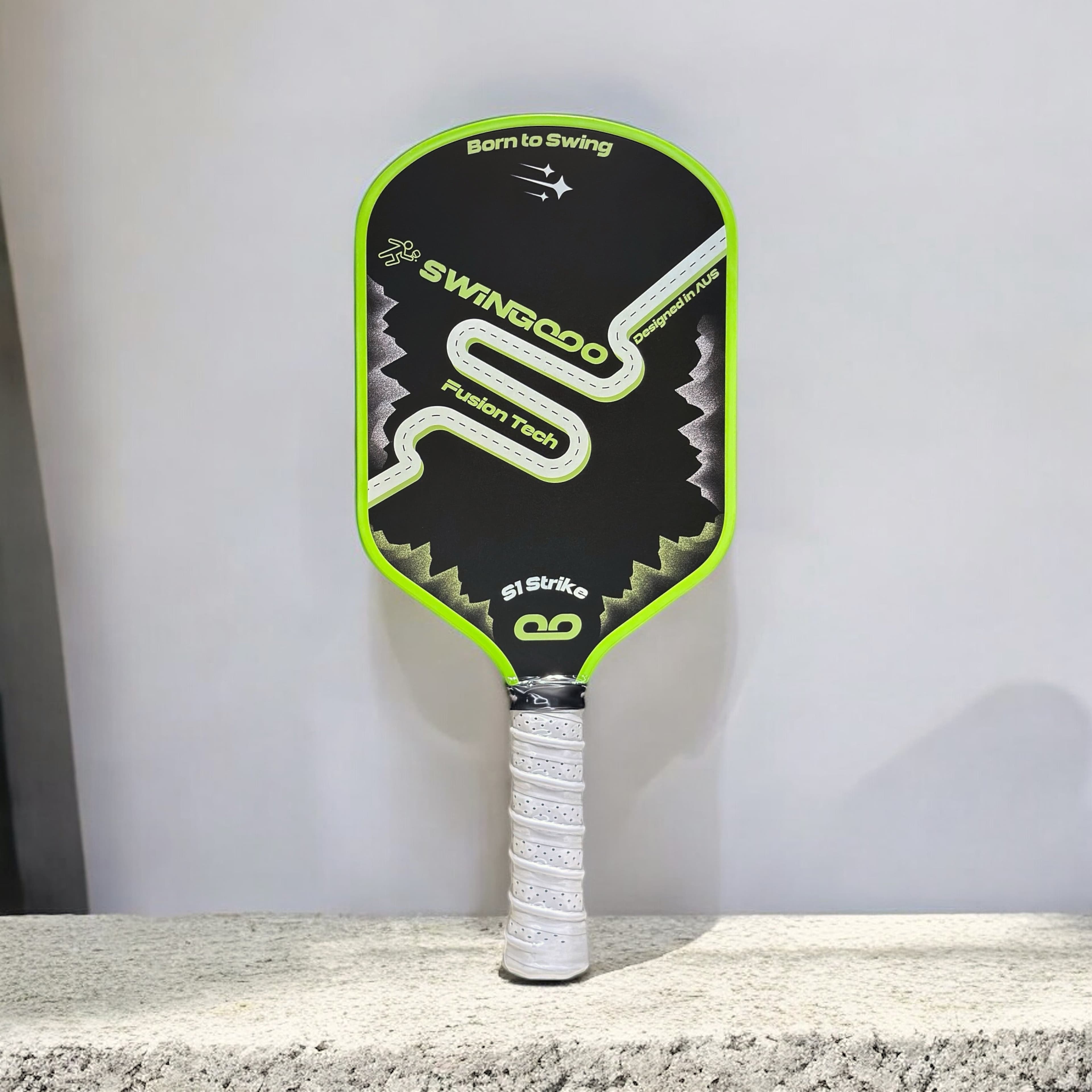
The S1 Strike comes in 14mm and 16mm with the same Fusion Tech face, the same shape and the same handle, so the core is the only thing that changes. It's the cleanest way we know to choose by feel. The price is the same either way.
Our paddles by core
| Paddle | Core | Face | Everyday price |
|---|---|---|---|
| S1 Play | 12mm polymer honeycomb | Grit-coated fibreglass | $99.99 |
| S1 Strike 14mm | 14mm polypropylene honeycomb | Fusion Tech (fibreglass + carbon fibre) | $159.99 |
| S1 Strike 16mm | 16mm polypropylene honeycomb | Fusion Tech (fibreglass + carbon fibre) | $159.99 |
| S1 Pro Carbon | 14mm | Raw 3K carbon fibre | $189.99 |
Want to compare everything else as well? Compare all three paddles side by side.
Sources
- –Pickleball Central paddle guide: what core thickness tends to change.
- –Pickleball Warehouse paddle guide: typical core thicknesses.
- –Tennis Warehouse University paddle material study: lab measurements of thickness and rebound.
If you pick the wrong one
It happens. Unused paddles in their original packaging can come back within 30 days (change-of-mind return postage is yours). The returns page has the details.